

Taking the dog down the coast for Christmas? Read this before you pack the car.
Vets in Canberra and inland Victoria see it every summer: a dog that has never met a paralysis tick, a lovely week at the coast, and then trouble a few nights after getting home. Here's why it happens, and the kit coast locals pack.
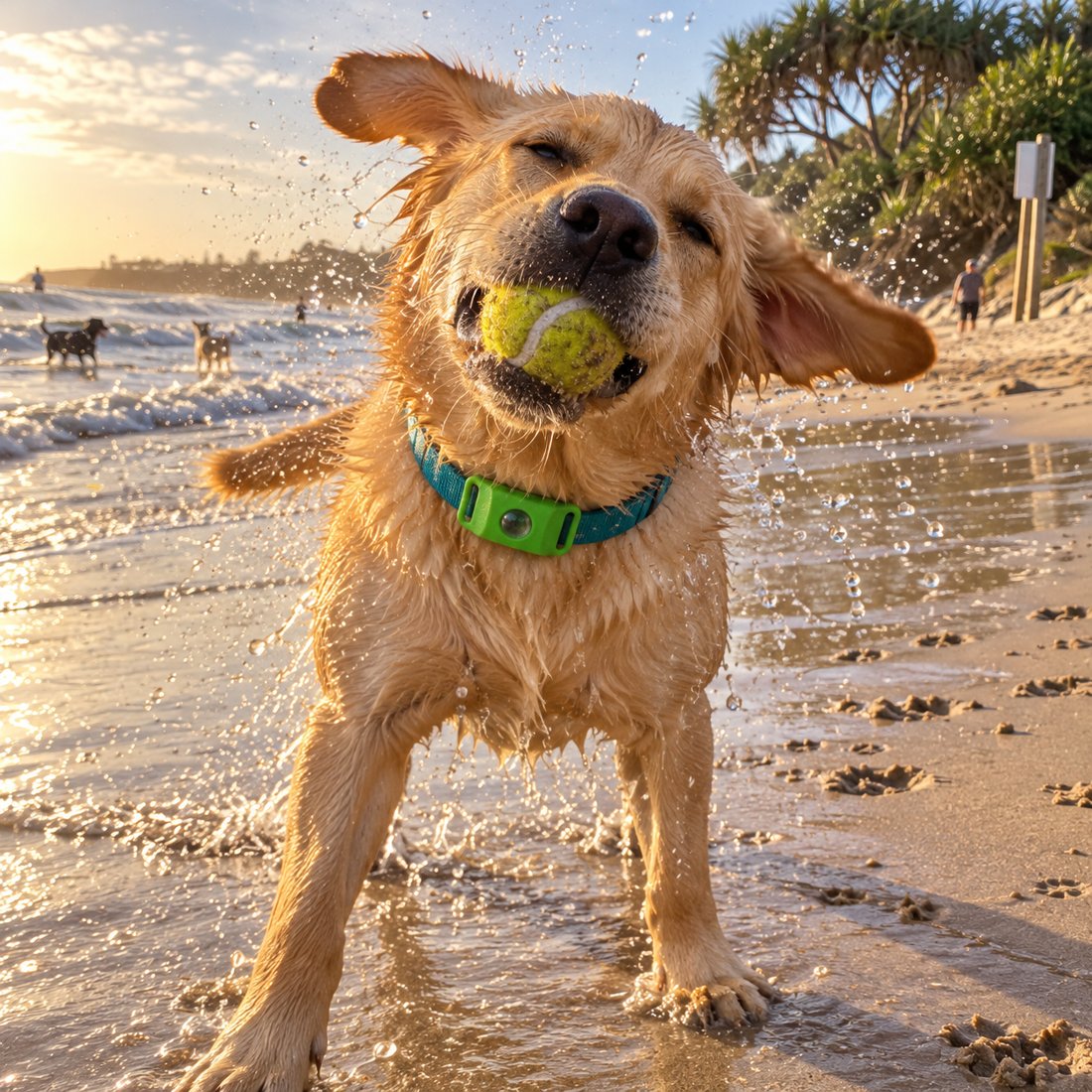
Picture the fourth night after you get home.
The car's unpacked. The towels are in the wash. It was a lovely week down the coast: the beach every morning, the grandkids, the dog flat out on the end of their bed every night.
Then, just before bed, her bark comes out hoarse. She gags, like something's caught in her throat. When she gets up, her back legs don't quite come with her.
At the emergency vet, one of the first questions won't be about what she ate. It will be whether she's been down the coast lately.
Because this is how paralysis ticks so often work for dogs from Canberra, Victoria and Adelaide: the tick is picked up at the coast, and the emergency happens at home.
If you're driving from Canberra, Victoria or Adelaide to the coast these holidays…
If your dog sleeps on the grandkids' bed the minute you arrive…
If your holiday house is an hour from the nearest after-hours vet…
If your dog is "on a chew", so you've never really worried…
…then the next seven minutes are worth more than anything else you'll pack.
The "homecoming gap": why the trouble starts after the holiday
A paralysis tick doesn't make a dog sick straight away. It has to attach and feed, and its toxin builds as its salivary glands mature. The Australian Paralysis Tick Advisory Panel says signs usually appear from 72 hours after attachment. In the largest Australian study of dog cases, they were usually not seen before the fourth day 1 4. In cooler weather it can take longer 5.
That's the homecoming gap. A tick from the last beach walk shows itself after you've driven home, in a town where the local vet might see a case once every year or two.
What vets inland are saying
"We don't have paralysis ticks in Shepparton … We keep the anti-serum here because we get one case every year or two. And those cases are from people who have taken their pets to Lakes Entrance, Seaspray or anywhere up the east coast."
Dr Fiona Cameron, Kialla Veterinary Clinic, Shepparton (Dec 2023) 6
"All of our cases have some core history … travelling to the coast without protection, or someone's arrived from the coast."
Dr Grace Butler, Snowy Vets, Cooma (Sep 2026) 7
"All these people turn up not realising that they have to tick-protect their dogs before they leave."
Annette Smith, Animal Welfare League Shoalhaven, on the South Coast's January spike (Jan 2025) 8
- Theo, Canberra. A camping trip to Mystery Bay on the South Coast. He was admitted a few days after the family got home, went downhill again two days after his first discharge, and spent seven days on a ventilator. The bill came to around $20,000 11.
- Seven in a hundred. In the largest Australian study of dog cases, 6.9% of dogs treated for tick paralysis died 4.
"She'll be right, she's on her chew."
That's what most of us say. And keep the chew: a good, current tick product from your vet is the backbone of protection. A South Coast vet's advice to visitors is to make sure it's "one of the better products and not the really old-school ones" 8.
But here's the part nobody explains at the counter. A chew works after the bite, not before it. It sits in your dog's blood, and a tick has to attach and start feeding before it meets the drug 12. Bravecto's label, for example, states ">95% efficacy against paralysis ticks within 72 hours after tick infestation" 13.
The same label says two more things: search your dog every day, and the risk of tick paralysis "cannot be entirely eliminated" 13. Every Australian paralysis tick label we checked asks for that daily search.
And the weak spot is usually a gap. When Gold Coast emergency vets saw a run of cases this August, many were pets whose prevention had lapsed by just a few days 10. On holiday, with a different routine and a different fridge, that's easy to miss.
The chew is your last line. What's your first?
Where the ticks are while you're there
Warm, wet weather brings more ticks. Vets from the Gold Coast to Cooma have seen cases early and outside the usual months this year 7 10.
The holiday tick kit coast locals pack
People who've lived with paralysis ticks for decades don't rely on one thing. They stack layers, so that when one slips, the next one catches it.
- The vet's plan, two weeks out. Ask your vet what suits your dog and start it early enough to be working when you arrive. Set a reminder so no dose lapses while you're away.
- A tick hook in the glovebox, and one in your pocket. Take a tick off straight away, and don't dab it with anything first 5.
- The nightly check, collar off. Head first: "come straight round the head, behind the ears, under the chin and on the neck" 6. Then chest, armpits, between the toes and under the tail.
- Keep checking for a week after you're home. "It is important to continue daily searches of your pet while away and for at least one week after your return." 14
- A first layer on the collar. The one most of us forget. It sits right where the check starts, for the whole trip, there and back.
of dog patients in a University of Queensland study had the paralysis tick on the head, neck or ears 2. "Make sure to check under collars! This is a favourite place for ticks to hide, and it is often missed by owners." Dr Christine Stirling, Condamine Veterinary Clinic 5
The first layer: the dogcare pendant
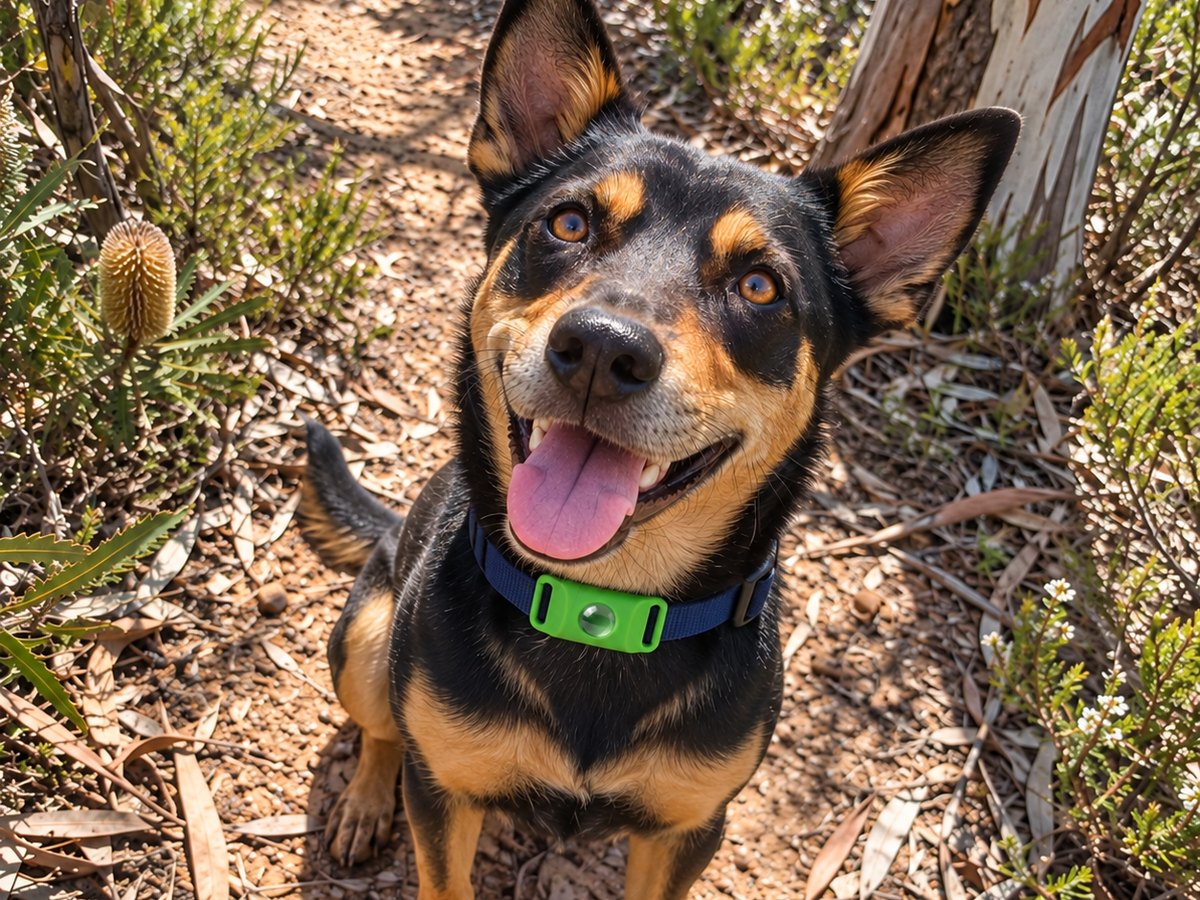
It's a small, soft green clip that slides onto your dog's collar or harness. Inside a sealed capsule are six plant oils: peppermint, citronella, eucalyptus, clove, cedarwood and chamomile.
They release slowly and give off a light scent right at the head and neck, where most dogs' paralysis ticks turn up and where your nightly check starts. In laboratory tests, citronella and clove oil repelled ticks about as strongly as DEET 17.
The chew deals with a tick after the bite. The pendant is there before it.
Up to 12 months
No dose to remember at the holiday house. One pendant keeps going for up to a year, there and back.
Waterproof
Surf, river, rain, the hose in the backyard. It doesn't mind.
Nothing swallowed, nothing on the skin
Change your mind? Unclip it in a second.
A free reflective collar with every pendant
Handy for the late walk in a dark holiday street. Sizes XS to XL, from a Jack Russell to a Great Dane.
What owners in Germany, Austria and Switzerland say

"My dog got ticks every single year. Since the pendant, not one."

"I was sceptical at first, but wow. My dog's back to relaxed walks in the forest without me checking her for hours afterwards."
Reviews translated from German. dogcare is the Australian edition of a pendant sold in Germany, Austria and Switzerland.
3 questions everyone asks
"Doesn't a clip only protect the neck?"
It sits at the collar, right where 73% of dog patients had their paralysis tick: head, neck and ears 2. The rest of the body is what the nightly check is for. That's the point of layers: no single one has to do everything.
"Do I still need the chew?"
Yes. In paralysis tick country, never drop your vet's protection. The pendant goes in front of it, never instead of it: the first layer, then the chew, then your hands every night, and for a week after you're home. Lab tests aren't the bush, and nothing stops every tick, which is exactly why you stack layers.
"Is it okay around the grandkids?"
The oils stay sealed in a capsule on the collar, so there's nothing on the fur the kids cuddle. Compare that with the label of one of Australia's most popular spot-ons, which says treated dogs shouldn't sleep in the same bed as their owner on the day of treatment, "especially children" 18. The pendant is made for dogs; if you also have a cat, ask your vet before using any oil-based product around it.
What one tick night costs
Claims data from PetSure 3.
Picture the trip home this time
Christmas morning, the grandkids on the floor with the dog, and nobody watching her back legs.
Evenings on the deck: collar off, two minutes, and the tick check is really just a cuddle.
And the fourth night after you get home is just another night.
Save this: if you find a tick, or see the signs
- Take the tick off straight away with a tick hook or your fingers, twist and pluck. Keep it for the vet 1.
- No food or water. Keep your dog calm, quiet and cool 1 15.
- Call a vet now, even if your dog seems fine. "Do not wait until the morning." 15
- Before you leave, look up the after-hours vets near where you're staying and save the numbers in your phone.
A pendant is prevention, not first aid. Never put oils or "natural" products on an attached tick 16.
Before you pack the car
Free tracked shipping takes 3 to 6 business days. To be safe, have it on the collar before the last day of school:
Free tracked shipping: order today and it's at your door in 3 to 6 business days.
Pack the car as usual, trust the chew, and hope nothing came home with you.
Pack the full kit: the vet's plan, the tick hook, the nightly check for the trip and the week after, and a 12-month first layer on the collar. Try it for 60 days, fully covered by our money-back guarantee.
The chew is the last line. Make the collar the first.
See the dogcare pendant →Questions before you go
We're heading to Queensland. Do we still need to worry?
Peak season in South East Queensland usually passes by late November, but vets see cases all year round, and this year started early. Pack the same kit wherever you go on the east coast.
How long should I keep checking after we get home?
At least a week. Signs usually start from three days after a tick attaches, and sometimes later in cool weather.
Will it arrive before we leave?
Shipping is free and tracked, and takes 3 to 6 business days. You'll get an email with your tracking link as soon as it's on its way.
Which collar size do I need?
Measure around your dog's neck. XS fits 20–30 cm, S 30–40 cm, M 35–50 cm, L 40–60 cm and XL 45–70 cm. Between two sizes? Take the bigger one. The pendant also slides onto the collar or harness you already use.
Can my dog swim with it?
Yes. The capsule is sealed and waterproof: beach, river, bath.
Is the smell strong?
It's a light plant-oil scent that most owners barely notice.
What if it's not for us?
You've got 60 days. If you're not happy, you get your money back.
Sources
- Australian Paralysis Tick Advisory Panel: Tick paralysis guidelines 2024
- University of Queensland, 22 Oct 2025: Paralysis ticks prefer heads and necks of pets
- PetSure Knowledge Hub, updated 18 Aug 2026: Ticks, fleas and parasites in pets
- Atwell & Vankan 2024, Animals (prospective study of dog tick paralysis cases)
- Condamine Veterinary Clinic, 12 Oct 2026: Paralysis ticks
- Shepparton News, 15 Dec 2023: Dr Fiona Cameron on paralysis ticks after coast holidays
- Region Canberra, 8 Sep 2026: Tick season now a year-round threat
- Canberra Times, 1 Jan 2025: Canberra holidaymakers warned of South Coast tick surge; South Coast Register, 1 Jan 2025: South Coast faces severe paralysis tick season
- University of Queensland, 3 Aug 2023: Data uncovers new tick threat times for Australian pets
- Yahoo News Australia, 17 Aug 2026: Ideal conditions create extreme risk for pets
- Canberra Times, 29 Nov 2021: Seven ticks lead to $20k vet bill as coast holiday ends in emergency room
- Roeber & Webster 2021, review of paralysis tick control in dogs
- Bravecto Chewable Tablets, Australian product label: APVMA eLabel 68872
- Greensborough Vets: Paralysis ticks
- RSPCA NSW: How to protect your pets from deadly paralysis ticks
- Bellingen Veterinary Hospital: Tick paralysis
- Thorsell et al. 2006, Phytomedicine. Laboratory study on European ticks, not on the pendant.
- Bravecto Spot-on for Dogs, Australian product label: APVMA eLabel 82797. Always follow the label of your own product.